 No White
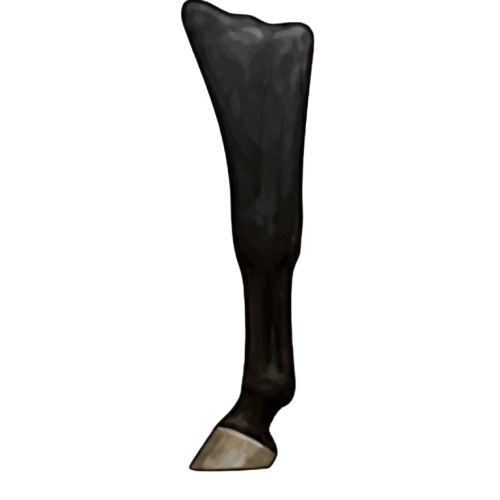
No Marking
A leg with no white. The coat color runs all the way down to the hoof. Only the hoof color may vary.
Learn how lower-leg markings are named and described. This lesson covers partial markings, ermine marks, and how the height of the white changes the name, with clear examples.
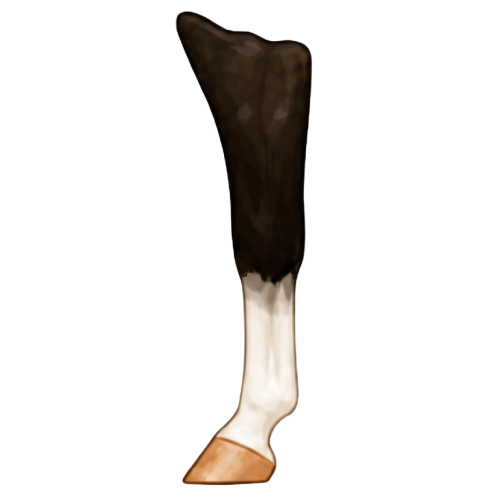
Leg marking names come from how high the white goes up from the hoof. The tabs below cover leg markings, partial markings, and height guides to show how the names change.
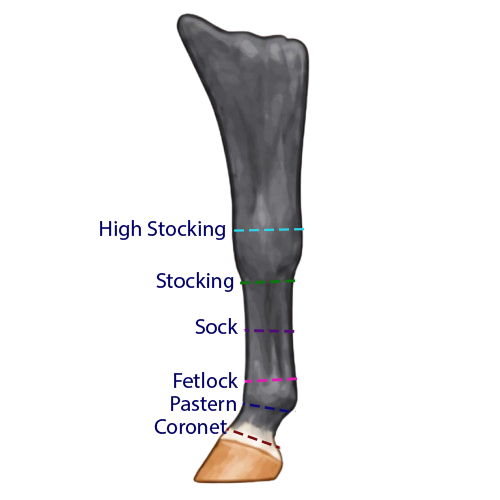
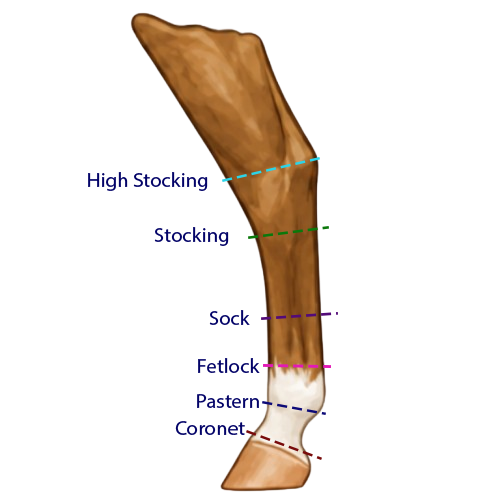
Leg markings are named by how high the white goes up from the hoof. These are the terms used to identify horses.
No WhiteA leg with no white. The coat color runs all the way down to the hoof. Only the hoof color may vary.
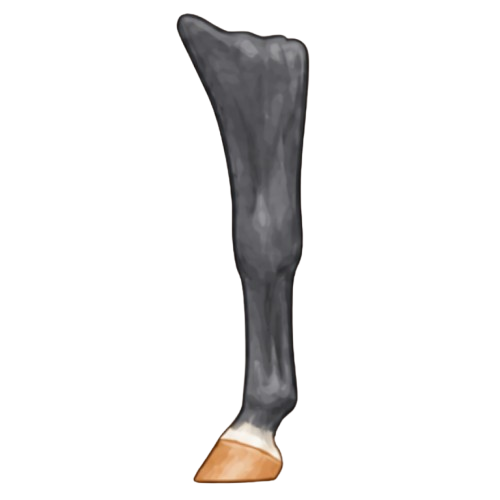 Lowest White
A coronet is a narrow band of white found at or just above the coronet band, directly above the hoof.
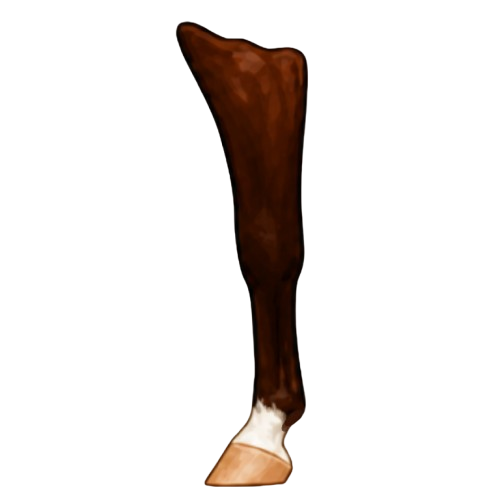 Pastern
This marking extends above the coronet and may cover part or most of the pastern, but it does not clearly extend above the fetlock.
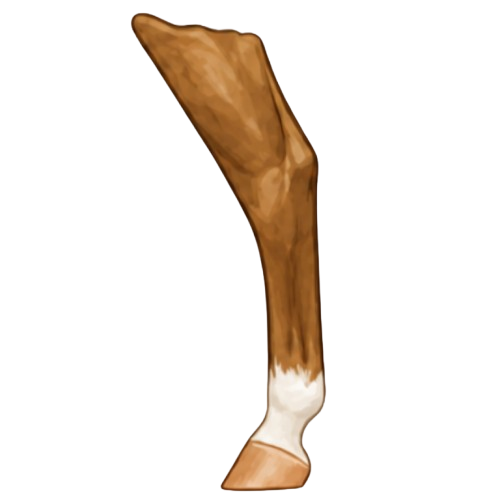 Fetlock
This marking reaches the fetlock area. It describes white that extends higher than a pastern but does not rise high enough to be called a sock.
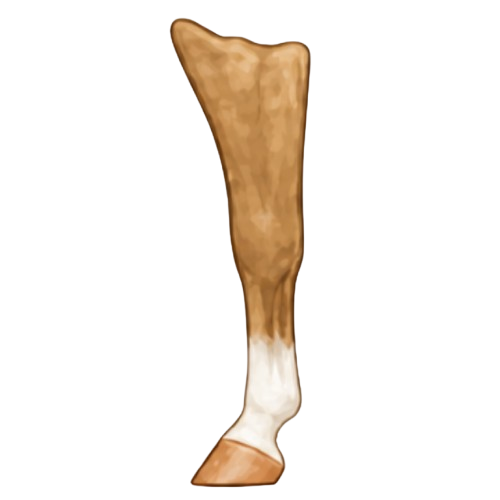 Lower Cannon
A sock has white that extends above the fetlock and partway up the cannon bone, but does not rise as high as a stocking.
Higher WhiteA stocking has white that goes well up the lower leg. It often reaches toward the knee on the front legs or the hock on the hind legs.
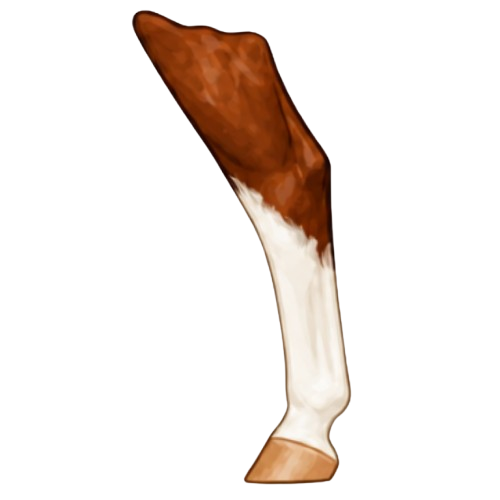 Highest White
A high stocking has white that extends onto or above the knee or hock.
Partial markings do not wrap evenly around the entire leg. They may appear on only one side or rise unevenly.
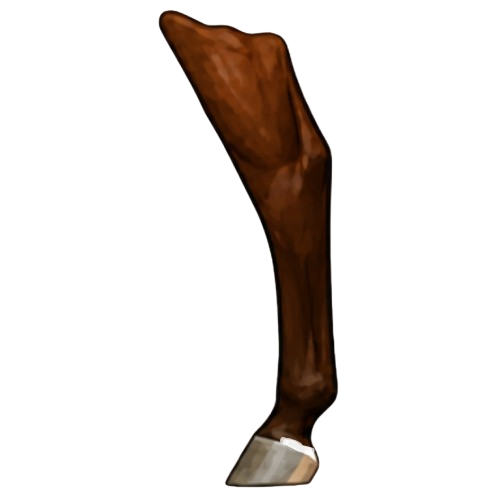 Partial Low White
A partial coronet has white that touches or follows part of the coronet band but does not form a complete band around the leg.
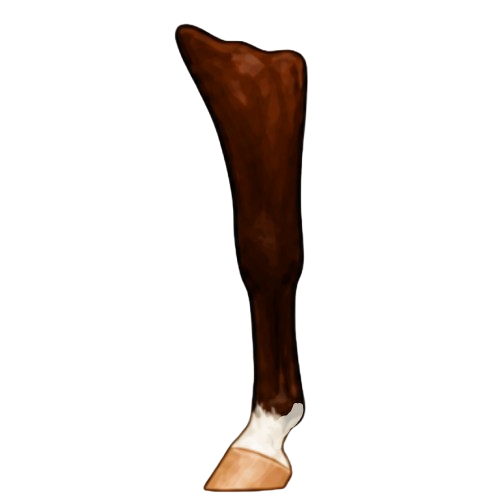 Partial Higher White
A partial fetlock has white that reaches the fetlock on only part of the leg or rises unevenly.
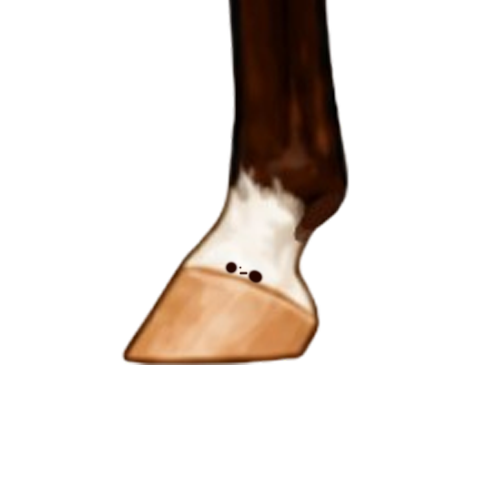 Spotted Detail
Ermine marks are small dark spots inside the white. Write them down, since they can help tell similar markings apart.
These guides show how far up the leg the white goes and where the names change. Use them as a guide, not a strict rule, since real markings can be uneven.