Reins and Voice
Drivers guide the horse mostly through the reins, voice, and training. The bridle and lines must be adjusted correctly so communication stays clear.
Horse driving is the practice of guiding a horse from behind while the horse pulls a cart, carriage, wagon, or other vehicle.
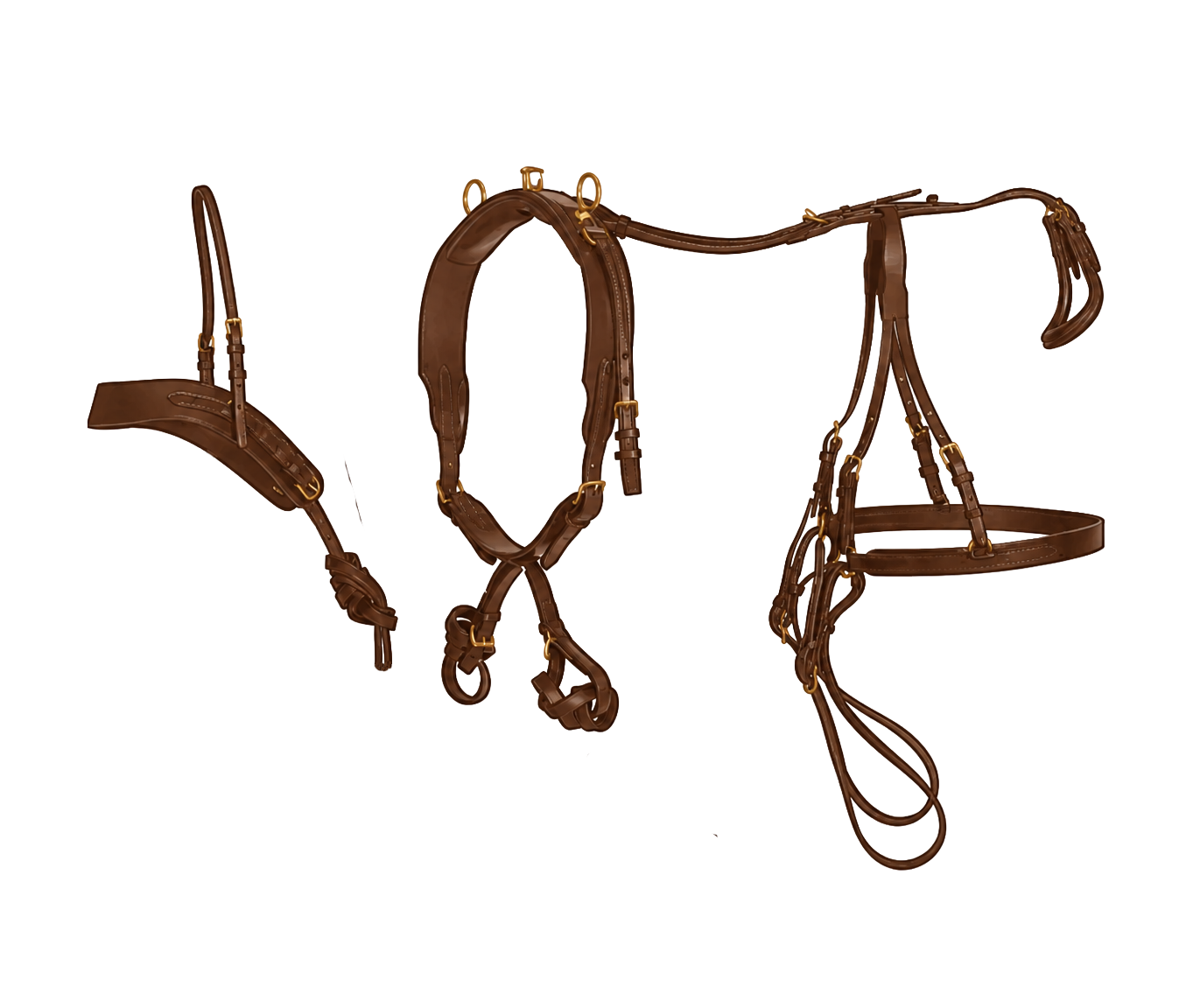
Driving equipment has to help the horse pull, steer, stop, and remain comfortable while connected to a vehicle. Because the horse is attached to more equipment than in most riding setups, clear part names and careful tack checks are especially important.
Learning the main harness and bridle parts makes it easier to follow instructions, recognize safety concerns, and understand how each piece works with the rest of the turnout.
💡 Did You Know
Horses were pulling wheeled vehicles for over 4,000 years before riding became widespread. The earliest evidence of wheeled horse-drawn vehicles dates to around 2000 BCE in the Eurasian steppes. For most of human history, driving a horse was far more common than riding one.
Driving can be recreational, competitive, agricultural, ceremonial, or practical depending on the horse, vehicle, equipment, and setting.
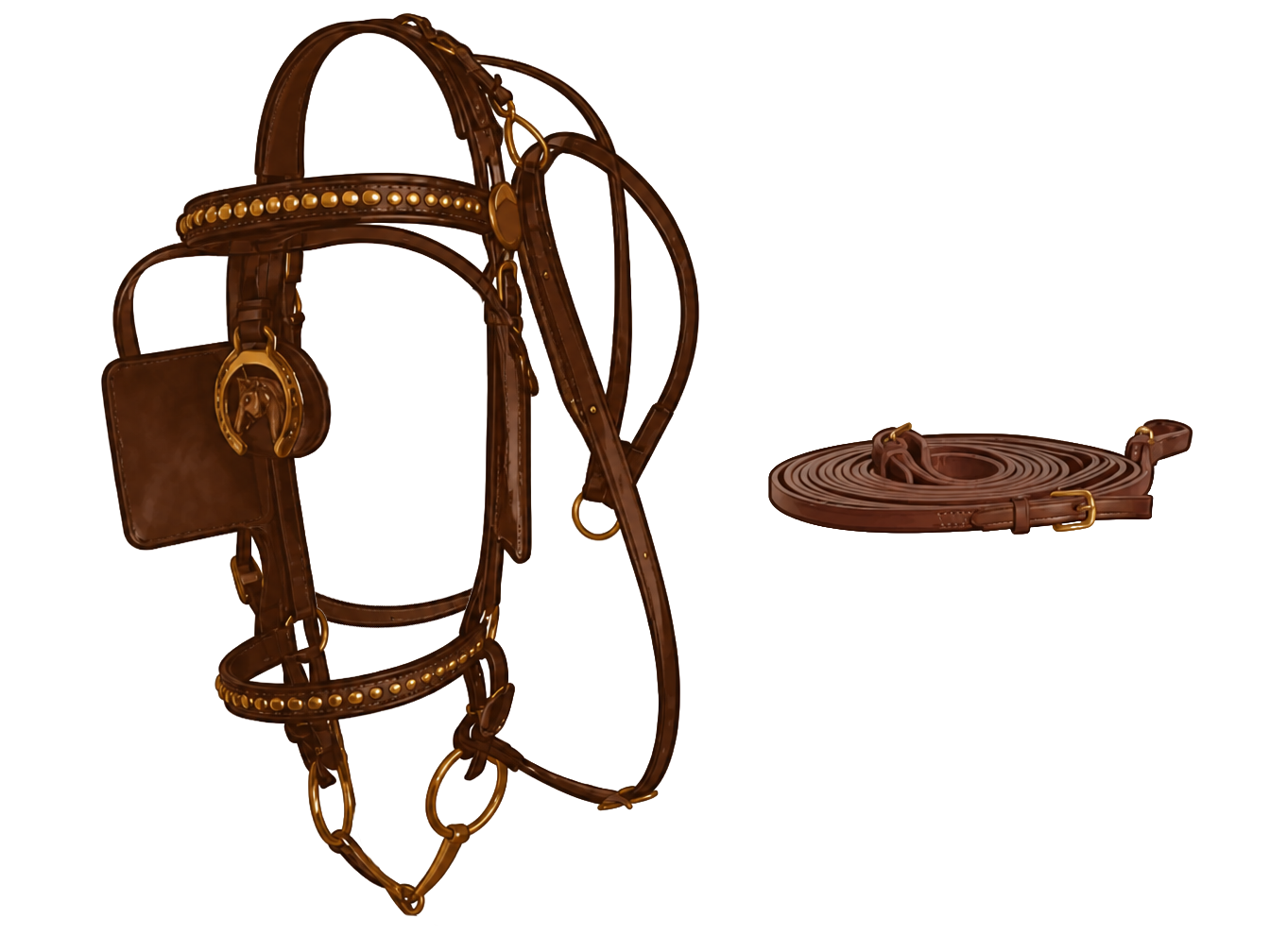
Drivers guide the horse mostly through the reins, voice, and training. The bridle and lines must be adjusted correctly so communication stays clear.
Harness parts such as the breastcollar or collar, traces, saddle, breeching, and crupper help connect the horse to the vehicle and manage pressure.
Drivers need to check buckles, traces, shafts, breeching, reins, and vehicle attachments before moving off.
Harness leather and synthetic parts should be clean, sound, and correctly adjusted so they do not rub, pinch, or restrict movement.
The set of straps and fittings that connects the horse to the vehicle and helps manage pulling, steering, and braking forces.
A bridle used for driving, often with blinders, cheekpieces, throatlatch, noseband, bit, and reins or lines.
The cart, carriage, wagon, or other wheeled equipment the horse pulls.
The complete horse, harness, vehicle, and driver presentation as a working unit.