Discipline Differences
Dressage, hunters, jumpers, eventing, saddle seat, and pleasure classes all use English tack, but the saddle shape and setup may change with the job.
English riding is a broad style of riding used in disciplines such as hunter, jumper, dressage, eventing, saddle seat, and everyday schooling.
English tack is designed to help the rider stay secure, distribute pressure, and communicate clearly with the horse. Knowing the equipment names helps riders follow instructions, check tack safely, and talk accurately with instructors, barn staff, and tack professionals.
English equipment can look complex at first because many pieces have specific jobs. Learning the main parts makes it easier to understand how the saddle and bridle work together.

💡 Did You Know
The flat English saddle developed partly to give cavalry riders a close-contact seat for sword fighting. A bulkier saddle would have impeded the range of motion needed for mounted combat. Many features of the modern English saddle — including its relatively forward-cut flap — are direct descendants of these military designs.
English riding includes several styles, and each one uses tack a little differently. Learning the parts helps riders understand how equipment supports position, communication, safety, and horse comfort.
Dressage, hunters, jumpers, eventing, saddle seat, and pleasure classes all use English tack, but the saddle shape and setup may change with the job.
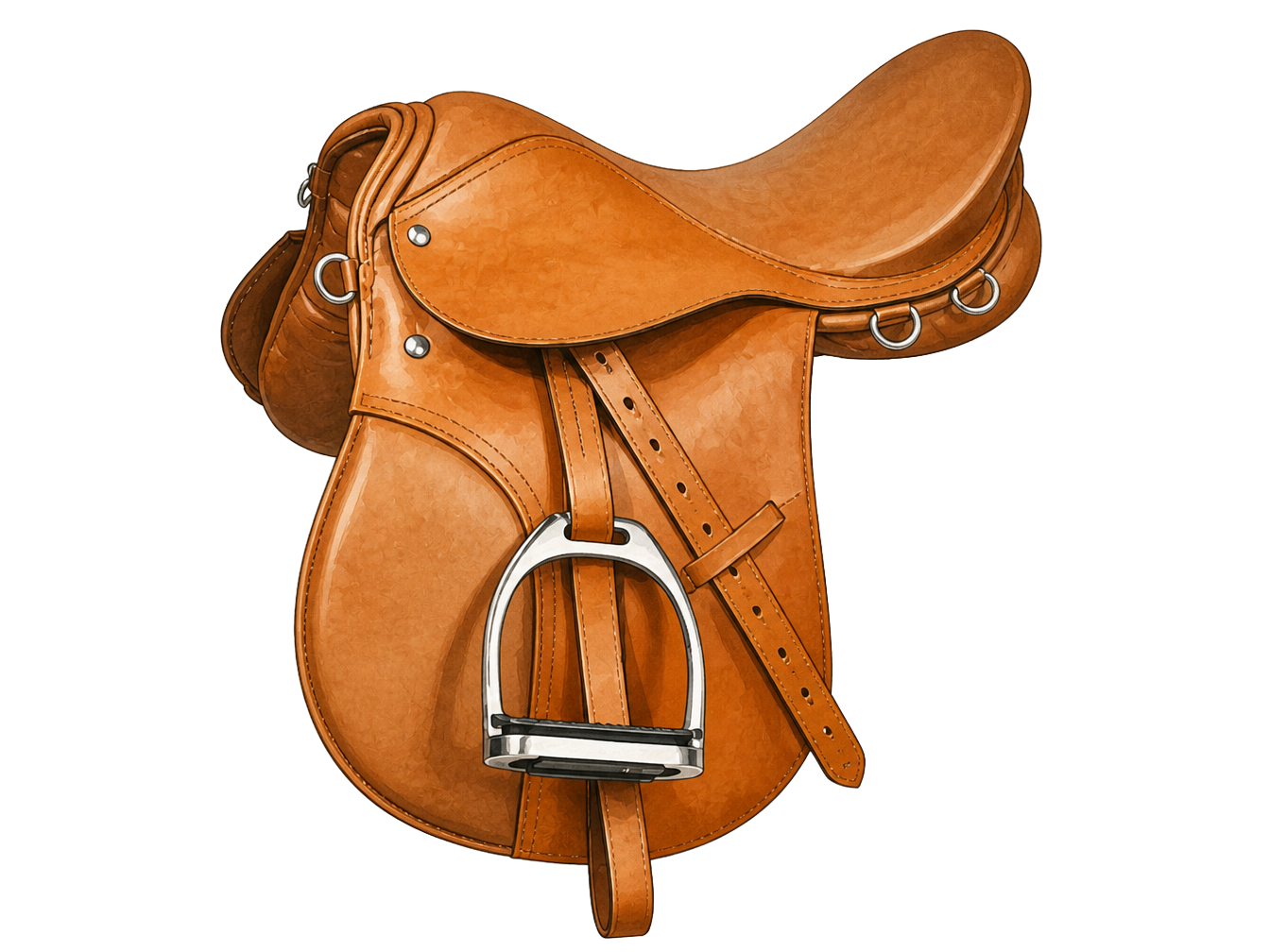
Knowing saddle parts helps riders understand how the seat, flaps, knee rolls, stirrup leathers, and stirrup irons support different riding positions.
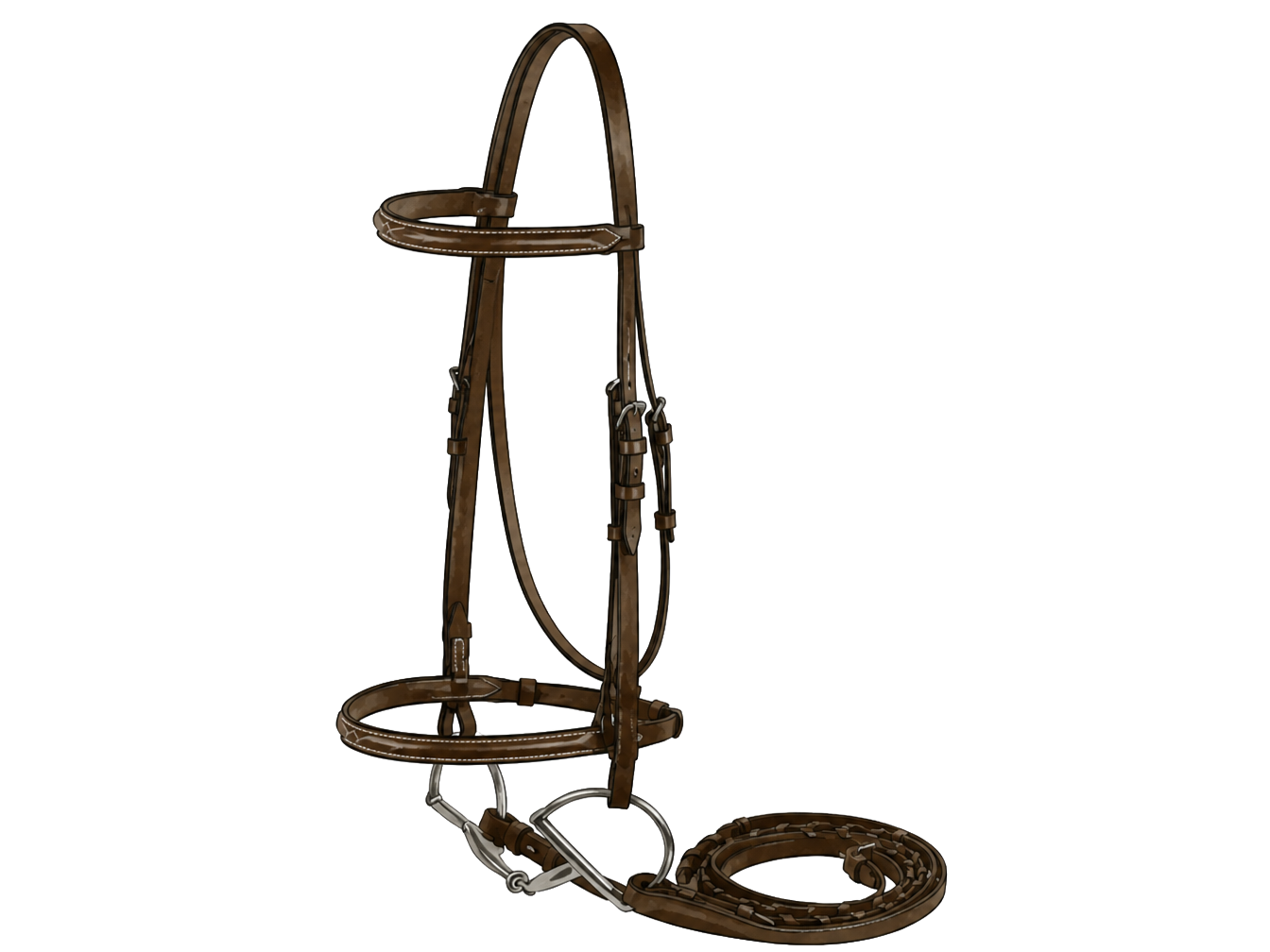
The reins, bit or bitless bridle, seat, and leg aids help the rider communicate. Understanding the parts makes those aids easier to discuss and adjust.
Riders should be able to identify and check key parts such as the girth, billets, leathers, irons, reins, and bridle before getting on.
Equipment used for riding, handling, or working with a horse, such as saddles, bridles, reins, girths, and stirrups.
A saddle without a horn, usually built with flaps, billets, stirrup leathers, panels, and a seat shaped for a specific English discipline.
Headgear used to guide the horse. It commonly includes a crownpiece, browband, throatlatch, cheekpieces, cavesson, reins, and a bit or bitless attachment.
Correctly adjusted equipment supports safety and comfort. Poorly fitted tack can interfere with movement, communication, or horse welfare.