Discipline Differences
Ranch riding, reining, western pleasure, trail, barrel racing, roping, and other western events all use western tack, but the setup may change with the job.
Western riding is a broad style of riding shaped by ranch work, cattle handling, long hours in the saddle, and practical horse-and-rider communication.
Western tack is designed to help the rider stay secure, distribute pressure, and communicate clearly with the horse. Knowing the equipment names helps riders follow instructions, check tack safely, and talk accurately with instructors, barn staff, and tack professionals.
Western equipment can look complex at first because many pieces have specific jobs. Learning the main parts makes it easier to understand how the saddle and bridle work together.
💡 Did You Know
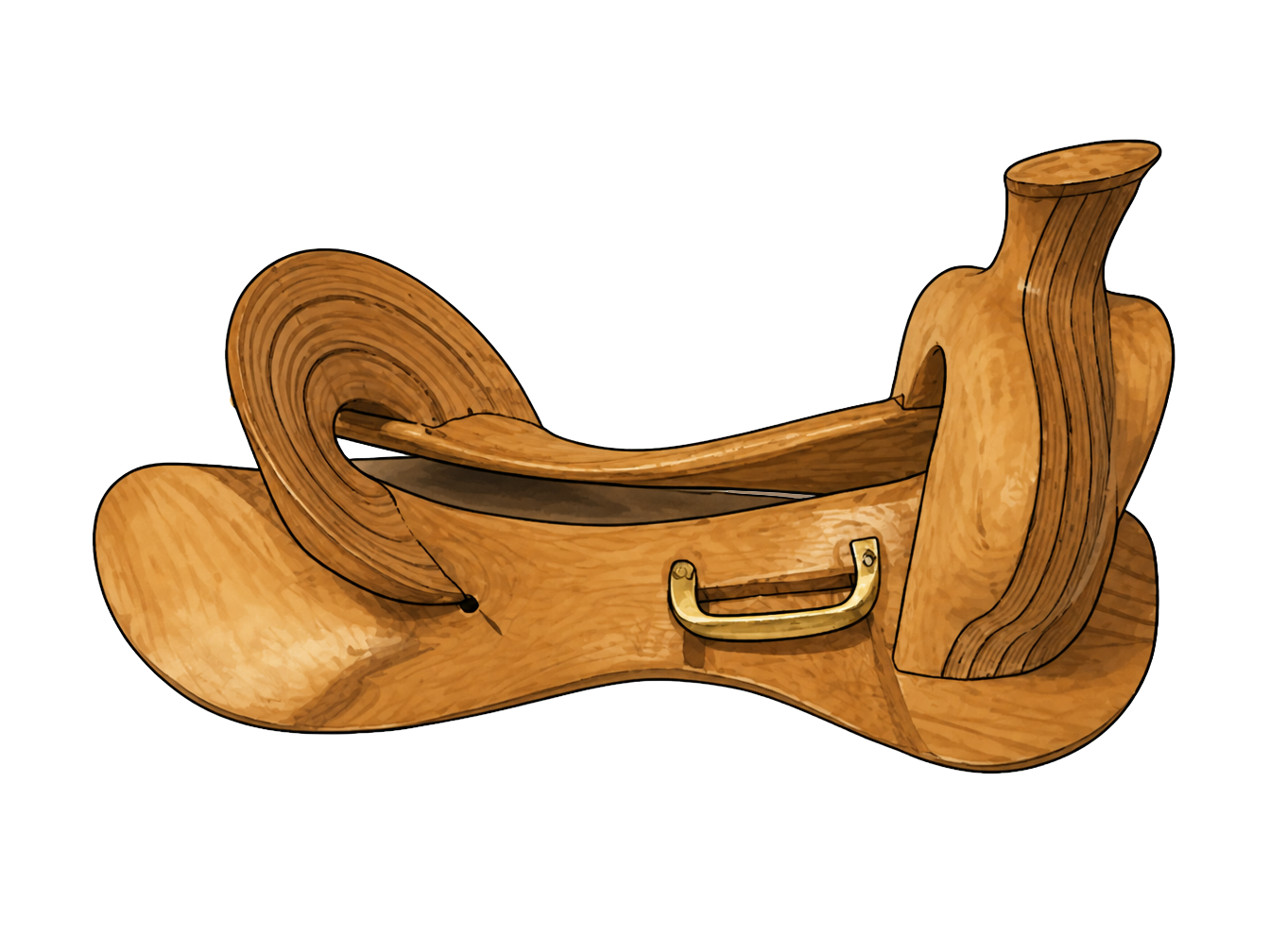
The Western saddle horn was not originally designed for roping — it was added as a practical anchor for cowboys working cattle after the sport of roping became popular in the 19th century. Earlier vaquero-style saddles used in California and Mexico had smaller, more decorative horns that served a different purpose.
Western riding includes ranch work, trail riding, and many show or speed events. Learning the parts helps riders understand how equipment supports security, communication, safety, and horse comfort.
Ranch riding, reining, western pleasure, trail, barrel racing, roping, and other western events all use western tack, but the setup may change with the job.
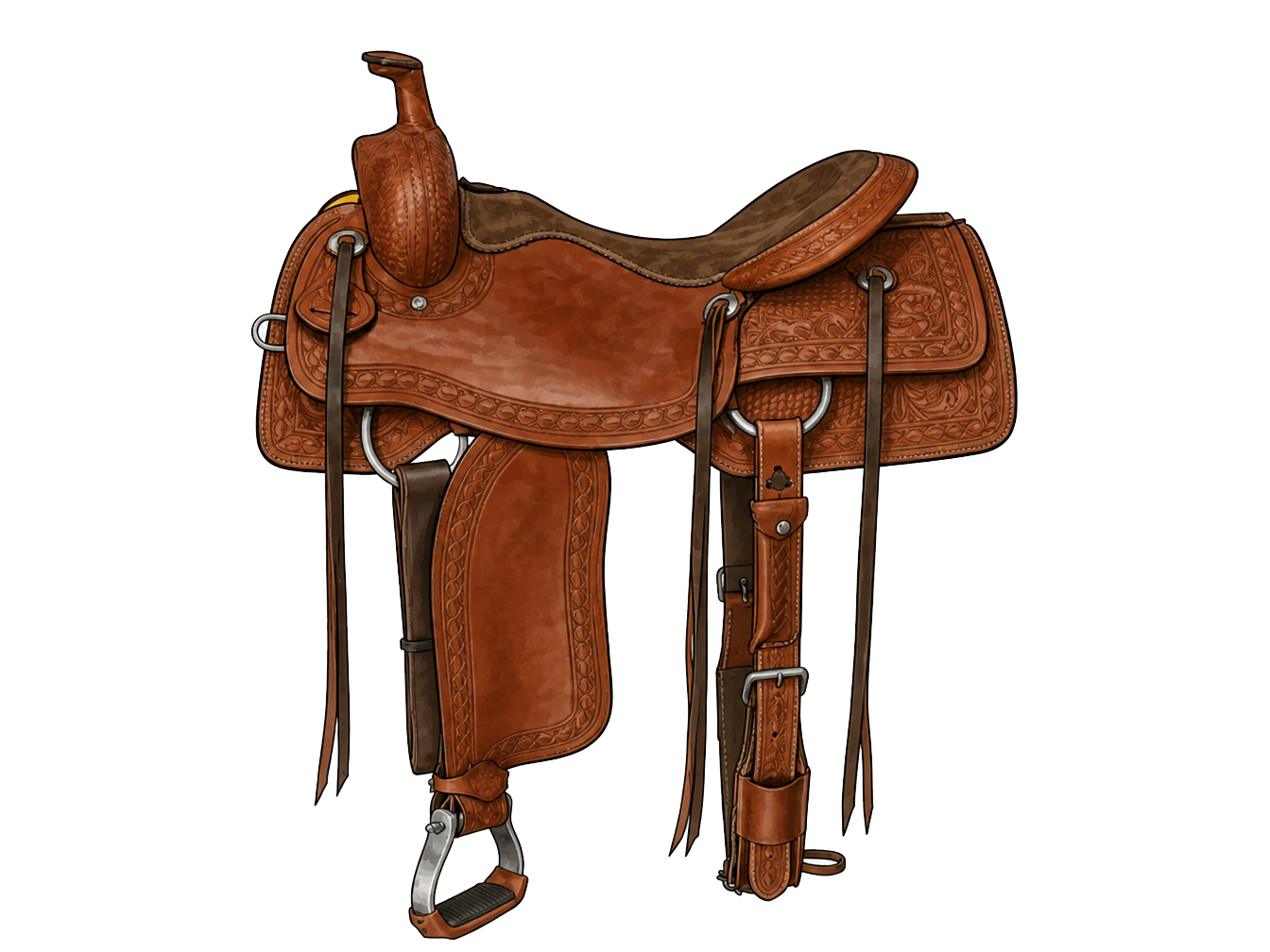
Knowing saddle parts helps riders understand how the seat, horn, swells, fenders, stirrups, rigging, and cinch help support the rider.
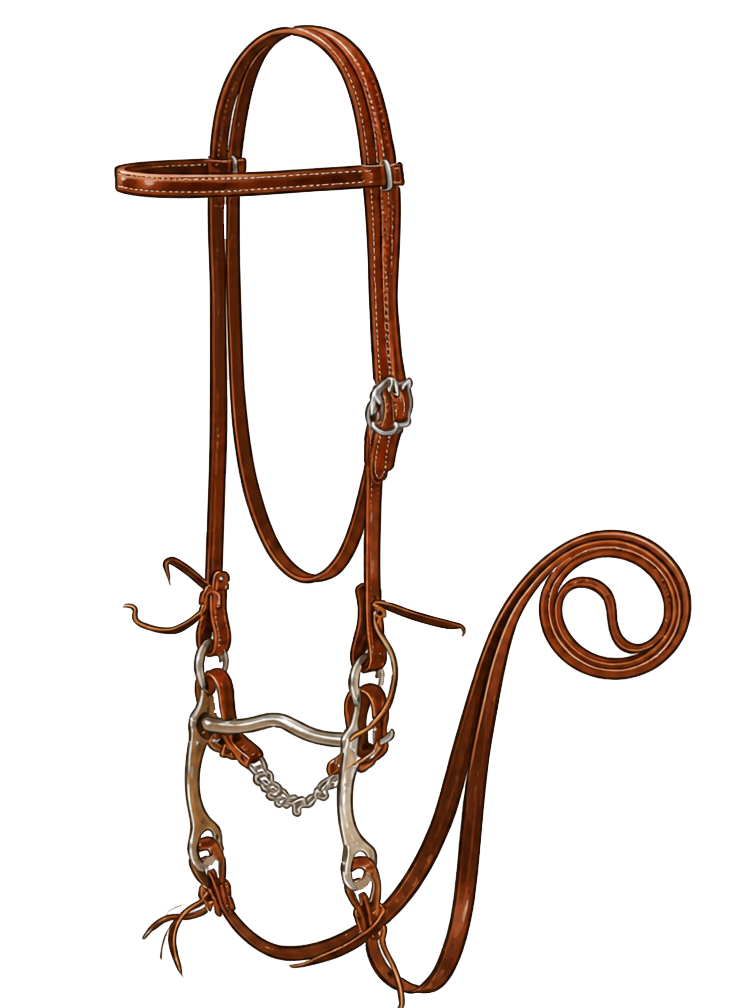
The reins, bit or bitless bridle, seat, and leg aids help the rider communicate. Understanding the parts makes those aids easier to discuss and adjust.
Riders should be able to identify and check key parts such as the cinch, latigo, billets, stirrups, reins, and bridle before getting on.
Equipment used for riding, handling, or working with a horse, such as saddles, bridles, reins, and cinches.
A saddle with features such as a horn, fenders, and a broad seat, commonly used in western riding.
Headgear used to guide the horse. It may include a headstall, browband or one-ear/two-ear style, cheekpieces, reins, and a bit or bitless attachment.
Correctly adjusted equipment supports safety and comfort. Poorly fitted tack can interfere with movement, communication, or horse welfare.